Managing a career while dealing with chronic muscle tension or a “tech-neck” headache is a job in itself.
For many of us, a heating pad isn’t just a luxury—it’s the silent partner that helps us get through a 2:00 PM meeting or a long commute home.
But when you’re staring at the options, the choice between electric and microwaveable isn’t just technical. It’s about which one fits the rhythm of your day.
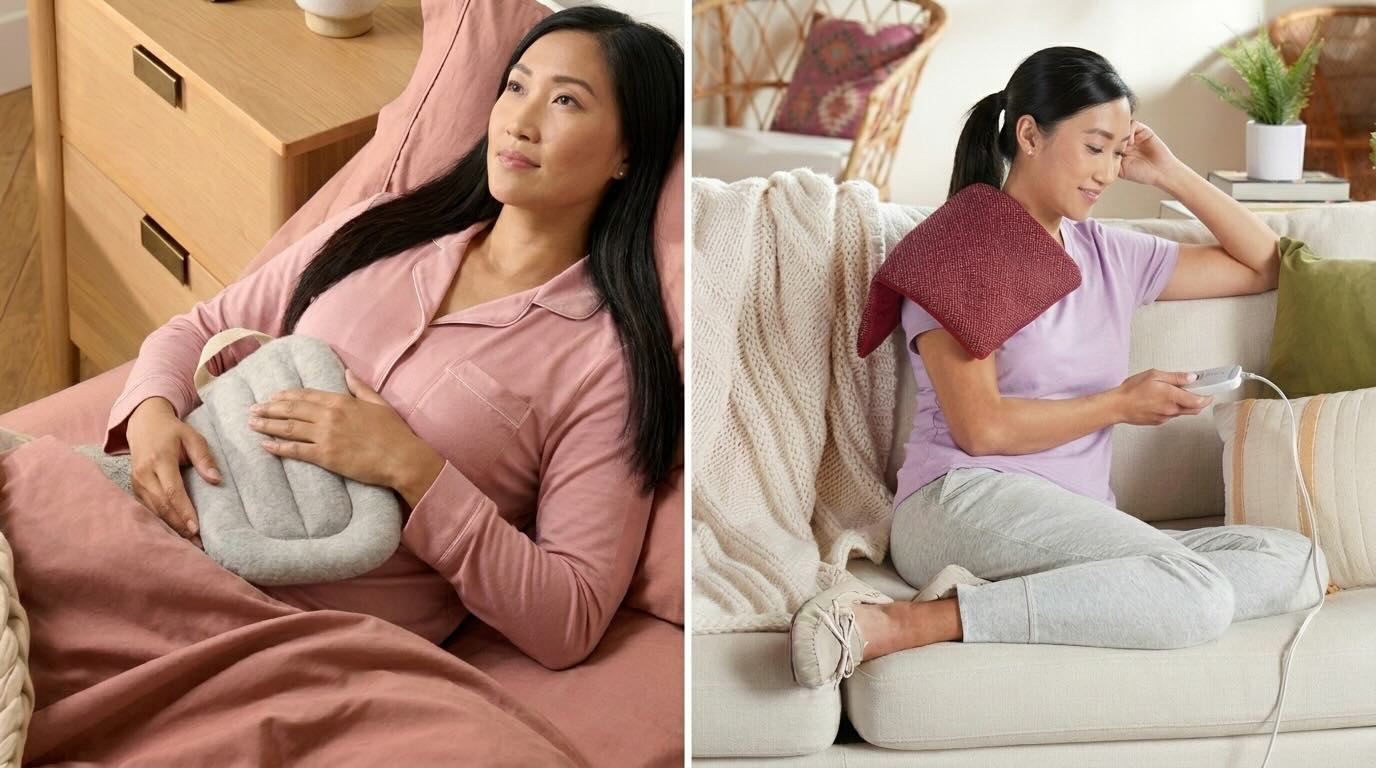
The Electric Pad : The Constant Companion
For those who spend hours at a desk, the electric heating pad offers a steady, unwavering reliability. It’s the “set it and forget it” solution for deep, persistent aches.
“Electric pads are generally more effective for chronic conditions where sustained heat is needed to increase blood flow and relax tight muscles over a longer period,” notes the orthopaedic team at Core Products.
- The Reality Check: You are tethered. “I love the consistency, but I hate feeling like I’m plugged into the wall like a toaster,” says Sarah, a freelance designer. If your workday involves staying put, the cord is a non-issue. But if you’re a “pacer” when you’re on a call, you might find yourself constantly unplugging.
The Microwaveable Wrap : The Mobile Healer
If your day is a sprint—moving from the kitchen to the car to the office—the microwaveable wrap is your best ally.
These are often filled with grains like flaxseed or clay beads, providing a “weighted” sensation that feels like a firm, comforting hand on your shoulder.
“Most clinicians feel that moist heat penetrates deep tissues better than dry heat for warming. Moist heat modalities transfer heat much faster… and cause much faster heat penetration,” explain researchers in a study hosted by the National Institutes of Health (NIH).
- The Lifestyle Fit: Because they are cordless, these wraps allow for “stealth healing.” You can wear one under a blazer or while making dinner. Plus, there’s a psychological safety net. As the experts at Sunny Bay point out, they have a natural “sunset”—they eventually cool down, which is a major relief for anyone who worries about falling asleep with a device plugged in.
Making It Work For You
So, which one belongs in your office drawer?
- The Marathoner: Choose Electric if your pain requires hours of steady heat and you have a dedicated “nesting” spot. Look for models with an auto-shutoff and a soft, micro-plush cover.
- The Multi-Tasker: Choose Microwaveable if you need to move, prefer the “spa-like” feel of moist heat, or want a tool that can double as a cold pack (just pop it in the freezer).
A Final Word on Boundaries:
Whether you choose the cord or the grain bag, the most important rule is knowing when to unplug. Heat is a powerful tool for relaxing a “work-from-home” backache, but it’s easy to overdo it when you’re focused on a deadline.
“Regardless of which type of heat you use, limit applications to 15 to 20 minutes at a time to avoid the risk of burns or skin irritation,” advises the clinical team at the Cleveland Clinic.
At the end of the day, relief isn’t about how long you stay plugged in—it’s about giving your body the short, focused recovery it needs so you can get back to doing what you love.
References
- NIH (National Library of Medicine). (2013). Moist Heat or Dry Heat for Delayed Onset Muscle Soreness.
- St. Charles Health System. (2024). Should I use ice or heat for my injury?
- Sunny Bay Wellness. (2025). Are Heat Pads Safe? A Guide to Using Them Effectively.
- Sacksy Thyme. (2025). Differences Between Electric and Microwavable Heating Pads.